Showing posts with label peruvian food recipes. Show all posts

Wednesday, 21 June 2017

The Art Of Crafting Something Delicious


Culinary art in India is a prominent part of our history and culture. For all those interested in pursuing it as a career, then it’s undoubtedly an exciting career around the world. Culinary is defined as “of or relating to a kitchen or to cookery” while art is described as "human effort to imitate, supplement, alter, or counteract the work of nature." When these words come together as culinary arts, it refers to creating something unique and beautiful and something that is entirely edible.
Food Recipes
 
It is called culinary arts chefs create delicious and inventive masterpieces. The culinary arts have been continuously growing in popularity and as a result, more and more people who love cooking are pursuing this career path. Under the culinary arts one gets the chance to learn about contemporary and classic culinary techniques, cooking methods and food recipes

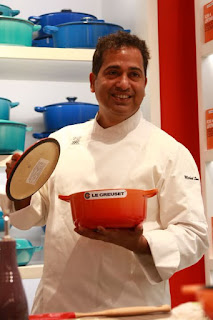
Indian celebrity Chef Michael Swamy is an ideal to many Indian students who wish to pursue culinary arts as a career. Having been exposed to the numerous arts including cooking, photography and writing from a very young age, he goes beyond being just a chef. A graduate of the prestigious Cordon Bleu Culinary School, London, he has done his specialization in Bakery and Patisserie. He has trained under and worked with several Michelin Chefs in the UK who observed his work closely and encouraged him to enter the world of Food Media. His mother having been a successful documentary film-maker, he has also closely studied and handled various aspects of film-making. His online recipe books are a great source to learn his style of cooking, especially for home makers and budding chefs. 

As a food writer, he is the author of “The East Indian Kitchen” which won the Gourmand Award 2011-12 in the Best Indian Cookbook (Technical) category. He has also authored the “Easy Guide to Pairing Indian Food and Wine” published by Om Books. His latest book “Comfort Food” co-authored with Mugdha Savkar and paired with Cafe Delhi Heights is a success. 

Indian chefs, today, are experimenting at various foreign cuisines like Mexican, Mediterranean and Japanese etc. Indian cuisine in itself is diverse. From Kashmir to Kanyakumari, the taste differs. Even the colonial influence has left its mark on the Indian cuisine. Then there is Mughal style of cooking. A good curriculum and experienced chef-instructors are must for those who wish to become a good chef. Remember culinary arts can’t be learned just by joining a particular course. It needs continuous grooming and mentoring to fine tune skills. 

Learning culinary arts from an institute give exposure to a variety of cuisines, bakery and service etiquettes. A culinary arts degree involves a combination of theoretical classroom instructions and hands-on experience in the laboratory. Veteran chefs are also invited to culinary institutes where they share their culinary expertise to the students. Today, chefs in India are blending international cuisines with India and experimenting with new innovative flavors. Undoubtedly, the art of culinary in India is an exciting industry full of ample opportunities.

Wednesday, 14 December 2016

Say Aye To Peruvian Food

The time has come! Time to make some space from the culinary arts in India, China and the like for Peru is enjoying a moment in the gastronomic universe! Peruvian food is a recent hot food trend in high end dining these days. This Peruvian cuisine is an interesting concoction of Spanish, Japanese, African, and of course the native Quechua culture and right now is on the minds of all the top chefs worldwide.

This cuisine uses a lot of key lime juice and red onion for flavors; and a subtle hint of spice provided by the fruity aji pepper, which leaves lips tickly. Peruvian food recipes also use lots of potatoes. Well, a sandwich can be found anywhere around the world which speaks a different language or a dialect. Here at Peru it is a sanguche and is a loved food item in their gastronomical journey. This Peruvian sanguche comes in countless shapes, sizes and seem to look really simple but are packed with Peruvian flavours. One of the favourite sanguches is the triple sanguche which can be turned into a healthy alternative by just substracting some of the mayonnaise from the recipe.

Along with that, salsas, sauces or dips are an indispensable part of the Peruvian cuisine and a must be present on every table. A Peruvian menu without at least three or four different salsas is not only incomplete but also misses the touch.  The Peruvians love their salsas and use them literally on any food item they like. Peruvian sauces intensify or vary the unique flavors of local dishes. Mostly all salsas contain typical Peruvian ingredients like aji which is a chili pepper, Peruvian lime juice and local herbs making them really distinct and lip smacking. Salsa Criolla in all probability is the most important and most popular side dish or sauce in Peru. Prepared with red onions, aji amarillo, the juice of Peruvian limes and some freshly chopped coriander or parsley, Salsa Criolla accompanies numerous typical local dishes and just has to be on the table when enjoying a great Peruvian meal. So, get into your Peruvian mood and whip us some delectable Peruvian recipes and surprise your friends and family!

Sunday, 20 November 2016

The Most Used Ingredients In Peruvian Cuisine

There are more than a few elements which outline the Peruvian delicacies and add a designated characteristic to the food. A few of them are as follows: Ajies are hot peppers that have been utilised in Peruvian delicacies for a few thousand years. They're a key aspect in the flavouring and colour of both common and present-day Peruvian Food Recipes.

AJÍ LIMO is a Multi-coloured miniature Peruvian pepper that is totally sizzling and mainly is available in a variety of reds, yellows and oranges. They are used to present dishes like ceviche a kick and for colour and decoration.  ROCOTO is a medium-sized, circular pepper that is very hot. These peppers are available a type of oranges, vegetables, and reds.

They're usually chopped raw to make a fiery salsa and can also be grounded right into a paste to spice up dishes. AJÍ AMARILLO is the most likely used sizzling pepper in Peru. It has a fragrant fruity flavour and has slight warmth. It's delivered to dish throughout cooking or used uncooked as a fit to be eaten garnish. Aji Amarillo is also as a rule utilised in its paste kind, including a sizzling fruity flavour and a high-quality yellow colour to the meals.

The paste can also be mixed with other parts to create a condiment or dipping sauce. AJÍ PANCA, also understand in the United States because of the Colorado or New Mexico chili is a kind of dried hot pepper. It offers a deeper, more "woodsy" flavour to dishes. Dry sautéed or soaked, aji panca is then grounded down to make a paste or powder to season and colour Food recipes. Yuca is a starchy vegetable used broadly in Peruvian cooking.

It has a bark-like masking with densely textured flesh and a slight candy style. It's prepared in an equivalent method to potatoes and is most commonly fried, boiled, or pureed.

Tuesday, 25 October 2016

A Dive In Diverse Food Culture Of Peru

When you travel to Peru, you will quickly detect that its diverse delicacies reflect the country’s long and colourful historical past. The ingredients you devour on a tour of Peru reflect the country’s exceptional geography, its vibrant mosaic of races and nationalities, and its ability to maintain old traditions at the same time embracing modern methodologies. Mountain, jungle, and coastal cultures encourage many of the ordinary Peruvian Food Recipes, at the same time other tasty dishes show traces of European and Asian flavours.


Lima represents this fusion as good as the best of the distinctive areas of Peru – the Andes, the Amazon, and the coast. This fusion of both international and Peruvian cuisine is first-rate represented with the aid of Ceviche, the pleasant natural dish of Lima. Raw and fresh fish of coastal Peru combines with Ceviche with instruction methods used for Japanese sashimi. Lime Juice and Aji – Chili pepper is used to marinate the fish. Aji came from The Andes, discovered by the Incas in the previous age. 


Aji is known to be particularly rich in vitamins A, B and C and also contains huge amounts of capsaicin. Capsaicin helps with weight administration, at the same time unique causes are uncertain, study exhibits that capsaicin can increase power, lipid oxidation, and scale back urge for food. Ceviche additionally involves other normal Peruvian materials akin to candy potatoes, toasted maize or corn kennels. Equipped with Top Chef Recipes, you could cook homemade Peruvian-stimulated dishes. In the meantime, increasingly Peruvian eating places are shooting up far and wide and have become mainstream. Keep your eyes opened for a restaurant near you.

Monday, 26 September 2016

Peruvian Food Recipes Given By Top Chef

The traditional touch to all the Peruvian food recipes given by top chef of restaurants in Lima (Peru's culinary capital) is wonderful. If you haven't heard of Peru, it’s a country situated on the South Pacific Ocean side of South America, Peru is a land of contrasts, from Machu Picchu and the Inca trail and Amazon rain-forest to a sprawling, bustling capital. If you’re planning a trip to Peru, make sure you visit the vibrant city of Lima. 

The food variety is plenty with seafood, meat, egg, vegetables all Peruvian Food Recipes have their own place in your plate. Let’s mention some notable dishes and small info about it then. Starting with Ceviche, it’s the national dish of Peru, can’t start about dishes without mentioning this first. This is fresh marinated fish dish in Lima which is very healthy and a must have. Then there is the Pisco soup which is the best starter soup with simple and refreshing cocktail. Aji sauce is the green sauce everyone gets hooked with. It just meshes so well with other dishes. 
 
You will enjoy everything more with this. You think you know roasted chicken? Then let’s hear it after you try Peruvian roasted chicken. This changes totally when you marinate chicken overnight. If you don’t like Red salad or if someone doesn’t like fried chicken for whatever reason, make them try this with chicken. It works wonders together! Yes, it’s not what someone would believe but it should be tried first to believe. There can be many more Peruvian dishes which can enter the list here but let’s keep this as a short overview of what to expect with Peruvian food.

Friday, 19 August 2016

Evolving Food Culture of Peru

The culture of Peru is mixture of ceramics, music, textiles, literature and food. Thanks to Peru's three regions and ocean, there is no shortage of markets that offers variety of fresh ingredients that satisfied not only the housewife but also the most sophisticated chef. History of traditional peruvian food goes as way back to the time of Incas with its potatoes, maize and spices that later was influenced by the arrival of the Spanish colonies, and throughout It has incorporated the demands and styles of various migrations and "mestizajes".

Such groups include immigrants from China, Africa, Europe and Japan. There are numerous ingredients which play key role in peruvian food recipes like rice, chicken, potatoes, pork, fish and lamb. Most of these meals include one of the different kinds of "aji", or Peruvian hot pepper, which mainly are: red aji, yellow aji, red rocoto pepper, lamb, pork and chicken. Potatoes were already introduced 500 years ago in Peru when America had a visit from Spaniards. 


Cuisine of Peru has always been getting credentials from the world’s best chef. The best way to introduce to the culture is with the food distributed there Diversity of restaurants here has attracted number of chefs from all over the world in the recent times as well.

Influenced from the mountains, from the jungle, from the coast, and from counties like China, Japan and Europe, Cuisine of Peru includes international, rich, and spicy — stands distinct in Latin America. It’s no surprise that Peruvian cuisine has been taking over world in a swipe since it already embraces numerous cultures in it. Lima represents this fusion as well as the best of the different regions of Peru.